

Stop Getting Cheated by Landlords, Rogue Caretakers & Stubborn Tenants
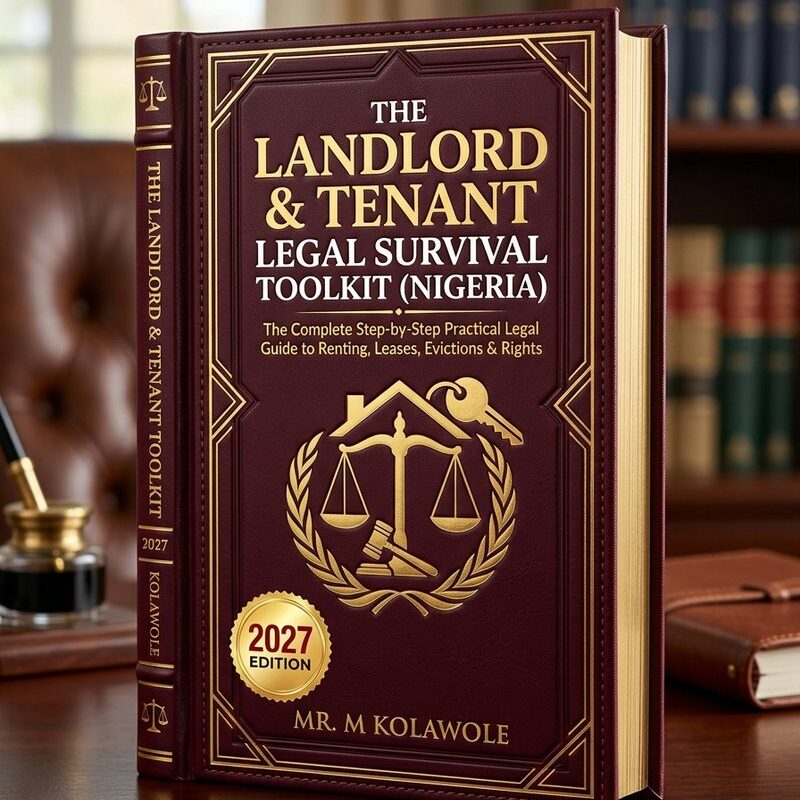
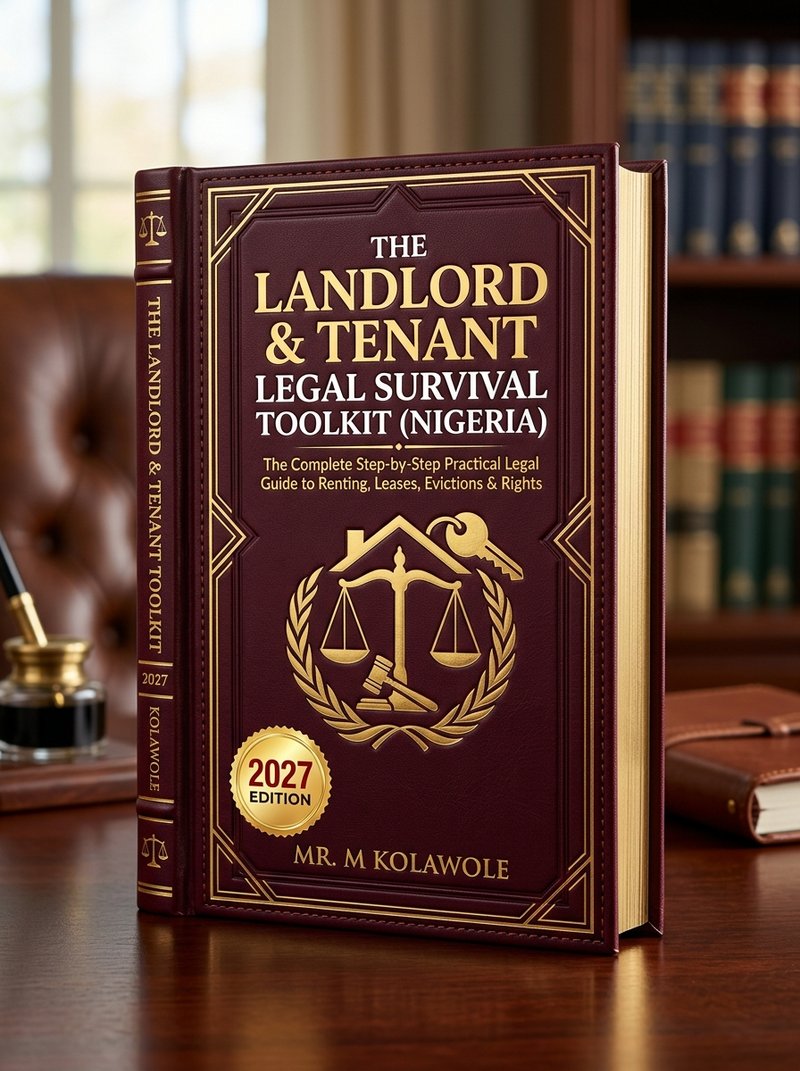
Get the complete, step-by-step Nigerian legal guide authored by Mr. M Kolawole. Includes complete residential & commercial agreements, statutory notice templates, caution deposit recovery guides, and eviction defense roadmaps.
Whether you are renting a flat in Lagos, Abuja, Port Harcourt, or Ibadan, or you are a property owner trying to manage your rental building, landlord and tenant conflicts are among the most stressful and expensive legal battles in Nigeria.
Every single week across Nigerian cities, hardworking tenants wake up to shocking 100% rent hikes, padlocked gates, and threats of having their roofs removed. Meanwhile, honest landlords watch stubborn tenants refuse to pay rent for two years while daring them to “go to court.”
Why do these conflicts get so bitter and destructive? Because both parties rely on street myths instead of the actual law.
The 4 Biggest Tenancy Myths Nigerians Believe
Myth 1: “Because I Own the House, I Can Lock the Gate or Remove the Roof”
This is the single most dangerous mistake a landlord can make in Nigeria. Under Nigerian law, self-help eviction is completely illegal.
Even if a tenant owes three years rent, a landlord cannot take the law into his own hands. Removing roofing sheets, cutting electricity wires, chaining the gate, or bringing area boys is a serious civil wrong and a criminal offense.
Under Section 44(1) of the Lagos State Tenancy Law 2011, any landlord or agent who cuts off utilities or damages a property to force a tenant out commits an offense punishable by a fine or up to six months imprisonment. Nigerian courts routinely award millions of Naira in damages against landlords who use self-help.
Myth 2: “If Rent Expires, the Landlord Must Give 6 Months Notice Regardless”
Many tenants assume they are automatically entitled to a six-month Notice to Quit. That is not always true.
Under Nigerian tenancy laws, statutory notice periods depend on the cycle of the tenancy:
- Yearly tenant: 6 months Notice to Quit.
- Half-yearly tenant: 3 months Notice to Quit.
- Quarterly tenant: 1 month Notice to Quit (3 months in Lagos State).
- Monthly tenant: 1 month Notice to Quit.
- Weekly tenant: 7 days Notice to Quit.
Crucially, if you signed a written tenancy agreement for a fixed term (e.g. exactly one year from January 1 to December 31), that tenancy terminates automatically by effluxion of time. The landlord does not need to serve a six-month Notice to Quit. Only a mandatory 7 Days Notice of Owner’s Intention to Apply to Recover Possession is required before going to court.
Myth 3: “A Caution Deposit Is Free Bonus Money for the Landlord”
Almost every Nigerian tenant has experienced this heartbreak: you pack out of a flat, and the landlord suddenly invents fake damages to withhold your caution deposit.
Legally, a caution deposit remains the tenant’s property held in trust. A landlord can only make deductions for actual, physical damage caused by the tenant (such as broken tiles, burnt fuse boxes, or cracked sinks).
A landlord cannot deduct money for normal wear and tear, aging exterior paint, or natural roof fading. If you leave the flat in tenantable repair, you are legally entitled to your full refund.
Myth 4: “The Police or Civil Defence Can Eject a Defaulting Tenant”
When a tenant defaults on rent, many landlords rush to the nearest police station or Civil Defence (NSCDC) post to report the tenant.
This is totally unlawful. The Nigerian Police Force has zero legal authority in civil tenancy evictions. Police officers cannot act as rent debt collectors. If a landlord uses security agencies to intimidate or lock out a tenant, the tenant can sue for the enforcement of Fundamental Human Rights under Sections 34 and 37 of the 1999 Constitution, securing substantial court damages against both the landlord and the officers.
What Is Inside “The Landlord & Tenant Legal Survival Toolkit”?
Written by legal educator Mr. M Kolawole, this comprehensive 2027 practical handbook breaks down every stage of renting, leasing, and property management under Nigerian law:
Module 1: The Foundation of Nigerian Tenancy Law
- Lagos State Tenancy Law 2011 vs Abuja Recovery of Premises Act vs Other States.
- Exempted luxury zones (Ikoyi, Victoria Island, Ikeja GRA, Apapa) and what rules apply.
- The 4 tenancy types: Periodic, Fixed-Term, Tenancy at Will, and Equitable Tenancy.
- Anatomy of a standard tenancy agreement and 3 lethal clauses you must NEVER sign.
- Stamping and legal admissibility of agreements in court.
Module 2: The Financial Battles (Rent, Fees & Caution Deposits)
- 10% Agency fee and 10% Legal agreement fee: Street practice vs statutory provisions.
- Caution deposits: Lawful deductions vs illegal extortion (normal wear and tear).
- Step-by-step strategy to legally reclaim your caution deposit with formal demand letters.
- Arbitrary rent hikes: What Nigerian courts have ruled on vindictive rent jumps.
- Advance rent caps: Lagos Tenancy Law 6-month vs 1-year rules.
- Service charges in gated estates: Auditing developer accounts and resisting utility billing fraud.
Module 3: Rights, Duties & Everyday Property Battles
- Who pays for what: Structural repairs (roof leaks, cracked walls, septic tanks) vs internal tenant repairs.
- The Rule of Set-Off: The 6 mandatory legal steps to repair a dilapidated building and lawfully deduct the cost from your upcoming rent.
- The Covenant of Quiet Enjoyment: Legal remedies against intrusive landlords.
- Inherited electricity bills: Protecting yourself from 500,000+ Naira Band A or estimated PHCN arrears.
- Criminal liabilities for utility disconnections under Section 44(1) of the Lagos Tenancy Law.
- The sitting subtenant crisis: Preventing unauthorized roommates from hijacking your apartment.
Module 4: The Eviction Process (Step-by-Step)
- Calculating exact notice anniversary dates to prevent court dismissals.
- Valid notice delivery: Personal service, adult inmate service, and pasting on the gate.
- The mandatory 7 Days Notice: Why serving it early ruins your court case.
- Court recovery step-by-step: Magistrate Court vs High Court, filing fees, and court bailiff execution.
- Mesne Profits: How landlords claim rent arrears for every single day a tenant holds over.
Module 5: Landlord Protection & Diaspora Property Management
- The 5-point tenant vetting shield: Payslips, 6 months bank statements, employer checks, NIN verification, and credible guarantors.
- The 30% income-to-rent ratio rule.
- Managing rental property from the UK, US, Canada, or Europe: Appointing accredited property lawyers with restricted Power of Attorney.
- Eliminating caretaker theft: Direct bank accounts and bi-annual video inspections.
Complete Ready-to-Use Bonus Toolkit & Legal Templates
Along with the core guide, the book comes with 8 ready-to-use, printable legal tools:
- Standard Residential Tenancy Agreement Template: Balanced, legally vetted contract with clear covenants.
- Standard Commercial Lease Agreement Template: Specially drafted for shops, plazas, offices, and warehouses.
- Statutory Notice to Quit Template: Format following Nigerian state tenancy schedules.
- Statutory 7 Days Notice Template: Notice of Owner’s Intention to Apply to Recover Possession.
- 25-Point Tenant Pre-Move-in Inspection & Inventory Checklist: Printable checklist covering plumbing, electrical, roof, tiles, and keys.
- Formal Move-Out Caution Deposit Refund Claim Letter: Proven legal demand letter with a 7-day compliance deadline.
- Emergency Action Guide: Exact steps to take if your roof is removed or compound gate is padlocked.
- Plain-English Glossary: 25 essential Nigerian property law terms explained simply.
Protect Your Money, Your Property & Your Peace of Mind
One tenancy mistake can cost you millions of Naira in lost rent, damaged property, or wrongful eviction court damages. Equip yourself with the practical legal guide written for Nigeria.



My landlord in Yaba gave me two weeks to vacate because he wanted to increase rent by 100 percent. The statutory notice rules in Chapter 7 gave me the legal grounding to insist on my full six months notice. Worth every kobo.
Remarkably well structured. Both landlords and tenants need this book. Most landlords lose legitimate eviction suits simply because they served the 7 Days Notice before the Notice to Quit expired. Excellent reference material.
The caution deposit refund letter template in the bonus section worked like magic. My former caretaker had been avoiding my calls for two months. Once I served him the formal demand letter with inspection photos, my deposit was returned within 48 hours.
As a property owner managing five units in Surulere, Module 5 on tenant vetting forms and income verification has completely changed my management approach. Preventing bad tenants is far cheaper than court recovery.
Landlords padlock gates and cut wires thinking they have total power. This book clearly explains why self-help is a criminal offense and how tenants can claim heavy court damages. Very empowering.
The commercial lease clauses in Bonus 2 helped me negotiate a favorable 5-year lease for my retail outlet in Ikeja. Knowing the difference between tenant repairs and structural repairs saved me millions.
Detailed, practical, and highly relevant. Managing diaspora properties from London is tough, but Mr. Kolawole provides a foolproof roadmap on using registered estate lawyers and escrow accounts.
The explanation of mesne profits and holding over clarified a massive dispute we had at the rent tribunal. Straightforward legal advice without fluff.
The pre-move-in checklist should be mandatory for every tenant in Nigeria. I documented pre-existing wall cracks and dampness that would have definitely been deducted from my deposit later.
Fantastic toolkit. Clean, direct language and very high utility. I purchased copies for my siblings who just moved into their first rented apartments in Lagos and Port Harcourt.